
How to Achieve Uniform Through-Heating of Forging Billets
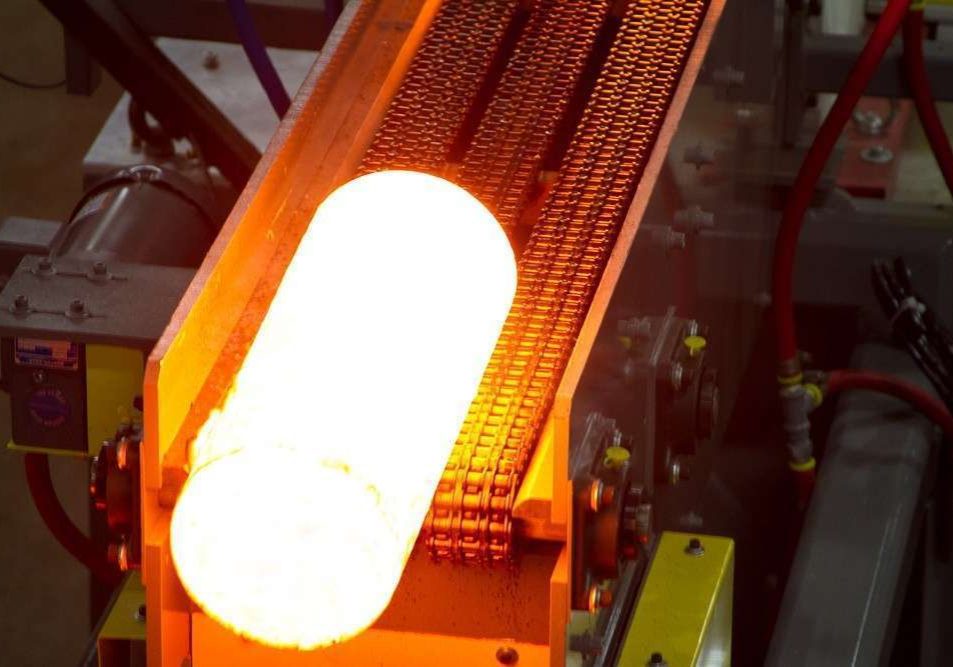
Achieving uniform through-heating in a forging billet requires more than simply bringing the billet surface to the desired forging temperature. The induction heating process must be designed to achieve the required temperature distribution from the billet surface to its core while avoiding localized overheating.
Billet size, material properties, induction frequency, power distribution, heating time and production rate all affect temperature uniformity. For large forging billets in particular, the way power is applied throughout the heating cycle can be critical to achieving the desired surface-to-core temperature profile.
Why Is Uniform Through-Heating Difficult in Large Forging Billets?
Induction heating generates heat directly within electrically conductive material. However, the induced current—and therefore the initial heat generation—is not necessarily distributed uniformly throughout the billet cross-section.
The electromagnetic phenomenon known as the skin effect causes current density to be greater near the billet surface. Heat must then conduct toward the billet core.
As billet diameter increases, achieving the required surface-to-core temperature uniformity becomes more challenging because heat must travel a greater distance toward the center of the billet.
This means that a billet can reach the desired surface temperature before its core reaches the required forging temperature. Applying additional power without considering the complete temperature profile can also create excessive temperatures below the billet surface.
What Determines Temperature Uniformity in Induction Billet Heating?
Several interrelated factors determine the final temperature profile of an induction-heated forging billet.
Induction Frequency
Frequency affects how deeply electromagnetic energy penetrates the billet. Higher frequencies tend to concentrate heating closer to the surface, while lower frequencies provide deeper penetration.
Selecting the appropriate frequency therefore requires balancing electromagnetic penetration, heating efficiency, billet dimensions, material properties and the required temperature uniformity.
There is no single frequency that is optimal for every forging application.
Billet Diameter and Material
Billet size has a major influence on the required heating strategy. Larger-diameter billets generally require more time for heat to conduct toward the core.
Material properties also matter. Electrical resistivity, magnetic permeability and thermal conductivity change with material type and temperature, influencing how the billet responds throughout the heating cycle.
The appropriate induction heating process therefore depends on both the billet geometry and the material being heated.
Heating Time and Production Rate
Temperature uniformity and production rate are closely related.
Allowing more time for thermal conduction can reduce the temperature difference between the surface and core. Forge shops, however, must also meet production requirements. An effective billet heating process must balance throughput with the required final temperature distribution.
Changes in production rate can also change the ideal power profile along an induction heating line.
Power Distribution
Where and when power is applied can be just as important as the total amount of power delivered to the billet.
Applying more energy earlier in the heating process can provide additional time for heat to conduct toward the core. However, a fixed power distribution is not ideal for every billet diameter or production rate.
For this reason, an induction billet heating system that can adjust power distribution along the heating line provides greater flexibility when processing different billet sizes or operating at different production rates.
Why Surface Temperature Alone May Not Tell the Whole Story
Measuring billet surface temperature is important, but surface temperature alone does not necessarily reveal the complete thermal condition of the billet.
During induction heating, the maximum temperature can occur below the surface under certain heating conditions. A surface temperature measurement can therefore appear acceptable even when a hotter region exists beneath the surface.
Understanding the temperature profile throughout the billet cross-section helps reduce the risk of overheating while ensuring that the billet core reaches the temperature required for forging.
How Are Large-Diameter Forging Billets Heated?
The appropriate heating method depends in part on billet size and application requirements.
Progressive multistage horizontal induction heating is commonly used for small- and medium-diameter billets. For large-diameter steel or titanium billets, static heating with a vertical coil arrangement – or a combination of progressive preheating and static final heating – may be advantageous.
The optimal approach depends on factors including billet diameter, material, production rate and required temperature uniformity.
How Inductoheat Controls Surface-to-Core Temperature Uniformity
Inductoheat developed the InductoForge® Modular Billet Heating System specifically for the changing requirements of modern forge shops.
Individually controlled power modules allow power to be adjusted along the heating line rather than relying on a single fixed power distribution. This gives forge shops greater flexibility when heating different billet diameters or operating at different production rates while maintaining the required surface-to-core temperature uniformity.
InductoForge® systems can also use iHAZ™ Temperature Profile Modeling Software, a predictive numerical simulation technology that forecasts temperature throughout the billet cross-section – from the surface to the core. The software can be used to help establish heating recipes designed to achieve the required billet temperature profile while optimizing system efficiency.
[Learn more about InductoForge® Induction Billet Heating Systems.]
The Key to Uniform Billet Heating
Uniform through-heating is the result of balancing the entire induction heating process—not simply achieving a target surface temperature.
Frequency, billet diameter, material properties, heating time, production rate and power distribution must be considered together. For larger billets, controlling how power is distributed throughout the heating cycle and understanding the resulting temperature profile become especially important.
The objective is to deliver a billet to the forging operation with the required temperature distribution throughout its cross-section while minimizing the risk of surface or subsurface overheating.
Explore the Engineering Behind Induction Billet Heating
For a deeper technical discussion of forging temperatures, temperature uniformity, frequency selection, power distribution and induction billet heater design, read:
Intricacies for the Successful Induction Heating of Steels in Modern Forge Shops
By Dr. Valery Rudnev, Doug Brown, Dr. Chester J. Van Tyne and Dr. Kester D. Clarke.
Article: Induction Heating of Steels in Modern Forge Shops
Frequently Asked Questions
How do you achieve uniform through-heating of a large forging billet?
Uniform through-heating requires balancing induction frequency, power distribution, heating time, billet size, material properties and production rate. Because induction heating can concentrate initial heat generation toward the billet surface, sufficient time and an appropriate power profile are needed to achieve the required temperature distribution toward the billet core.
Why is the center of an induction-heated billet cooler than the surface?
The skin effect concentrates induced current closer to the billet surface. Heat is then transferred toward the core by thermal conduction. The difference can become more significant as billet diameter increases or when heating parameters do not provide sufficient time for temperature equalization.
Does lower induction frequency improve through-heating?
Lower frequencies generally provide deeper electromagnetic penetration, but frequency cannot be selected on penetration depth alone. Billet dimensions, material properties, heating efficiency, required production rate and temperature-uniformity requirements must all be considered.
Can billet surface temperature confirm uniform heating?
Not by itself. Surface temperature measurements are valuable for process control, but they do not directly measure the complete temperature distribution within the billet. Under some induction heating conditions, the maximum temperature can occur below the billet surface.
How does billet diameter affect induction heating?
As billet diameter increases, achieving surface-to-core temperature uniformity generally becomes more challenging because heat must conduct farther toward the billet center. Large-diameter billets may therefore require different frequencies, heating times, power profiles or heating approaches than smaller billets.
What is an InductoForge® billet heater?
An InductoForge® modular induction billet heating system is designed for forging applications. Individually controlled power modules allow power distribution to be adjusted along the heating line, while iHAZ™ Temperature Profile Modeling Software can predict temperature throughout the billet cross-section.